History
- 1968Cessna announces the Fanjet 500, its first business jet.
- 1969The prototype makes its first flight on September 15, 1969.
- 1971The FAA certifies the Model 500 Citation on September 9, 1971, under FAR Part 25 (transport category). Deliveries begin in 1972.
- 1976The improved Citation I arrives: a longer wing (47 ft 1 in span), JT15D-1A engines that give more thrust above 28,000 ft, and a maximum altitude of 41,000 ft.
- 1977The Model 501 Citation I/SP is introduced, certified under FAR Part 23 so that it can be flown by a single pilot when properly equipped.
- 1985Production ends after about 690 airplanes (Models 500 and 501).
Citation I specifications
| Citation I (Model 500) | |
|---|---|
| Length | 43 ft 6 in |
| Wingspan | 47 ft 1 in |
| Height | 14 ft 4 in |
| Engines | 2 × Pratt & Whitney Canada JT15D-1 series turbofans, 2,200 lb takeoff thrust each |
| Maximum altitude | 41,000 ft |
| Pressurization | 8.5 psi differential: sea-level cabin up to about 22,000 ft, about 8,000 ft cabin at 41,000 ft |
| Cabin | About 13 ft long, 5 ft wide, 4.5 ft high |
| Typical seating | 2 pilots plus 4 to 5 passengers, with a toilet |
| Baggage | 650 lb in the aft cabin compartment, plus a nose baggage compartment |
| Minimum crew (Model 500) | Two pilots: a pilot and a copilot |
Figures from the Citation/Citation I pilot training manual. Some early serial numbers differ (for example, airplanes UN 0001–0213 and 0234 not modified by SB 21-9 are limited to 35,000 ft with an 8.0 psi differential). Always use the Airplane Flight Manual of the specific airplane.
A simple, robust jet
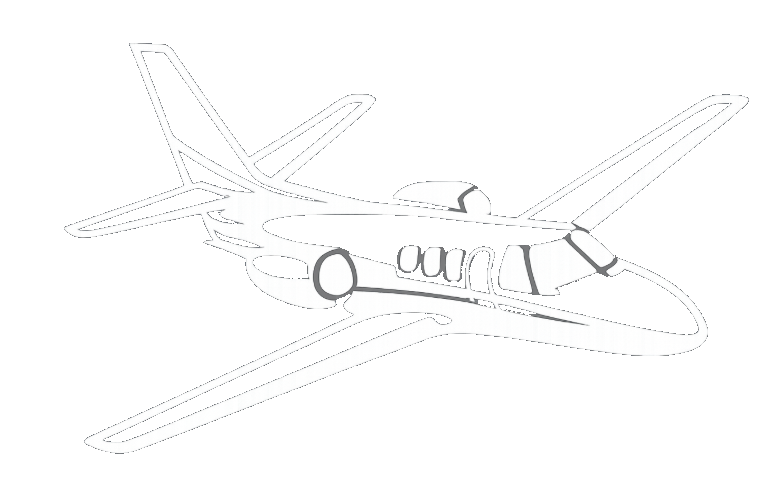
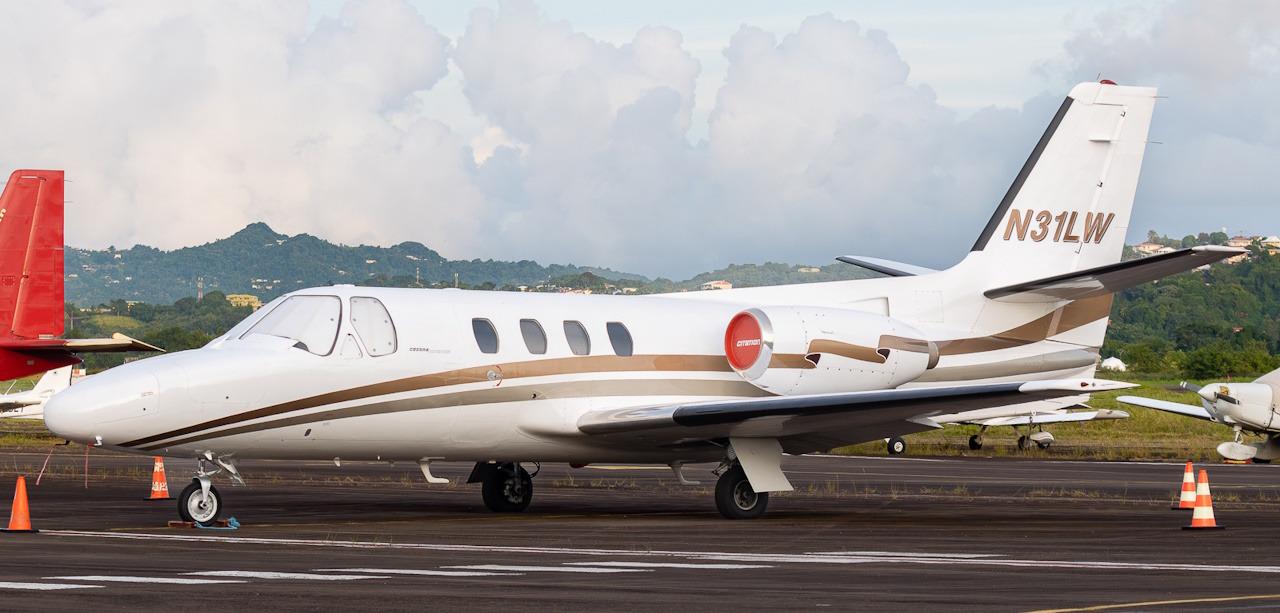
The Citation was designed for simplicity and easy maintenance. It is a pressurized low-wing jet with two engines mounted on the rear fuselage, built with a fail-safe structure. Its low takeoff and landing speeds let it operate from small airports.
- Electrical: two engine-driven starter-generators supply the DC system; two static inverters provide AC power.
- Fuel: two identical, independent halves, one wing tank per engine, with crossfeed.
- Ice protection: pneumatic boots on the wing and tail leading edges, an electrically heated inboard wing section, and engine bleed air for the engine inlets and the windshield.
- Hydraulics: engine-driven pumps for the landing gear, speedbrakes and optional thrust reversers, with pneumatic backup for gear extension and braking.
- Flight controls: conventional cable-operated controls, with mechanical nosewheel steering through the rudder pedals.
Test your knowledge of these systems on our Instagram quiz series
Why the Citation 500 needs two pilots
The Model 500 is certified under FAR Part 25 with a minimum crew of two pilots. The pilot in command needs a Citation type rating (FAR 61.58), and the copilot must meet FAR 61.55, the second-in-command qualification rule. For years, some operators flew these jets alone under FAA single-pilot exemptions. On September 29, 2026, the FAA ended those exemptions, so the Model 500 and the other two-pilot Citations of the 500 series now always need a qualified second pilot.
One type rating, many Citations
CE-500 is the FAA type designator for the whole Citation 500 family. The same CE-500 rating covers the Model 500 (Citation and Citation I), 501 (Citation I/SP), 550 (Citation II and Bravo), 551 (Citation II/SP), S550 (Citation S/II), 552 (T-47A) and 560 (Citation V, Ultra, Encore and Encore+). The rating is the same for all of them; moving between models may require differences training, as described in the FAA Flight Standardization Board report for the CE-500.
Fly the Citation I with us
We train in two Citation I jets, N31LW and N74LL, at North Perry Airport (KHWO) in Florida: online ground school on the real Citation systems, then flight training in the actual airplane under FAR 61.55.
Frequently asked questions
CE-500 is the FAA type designator for the Cessna Citation 500 family. It is the code that appears on a pilot certificate for a type rating in these airplanes, from the original Citation and Citation I to the Citation II, Bravo, V, Ultra and Encore.
No. The Model 500 is certified under FAR Part 25 with a minimum crew of two pilots. Only the Model 501 Citation I/SP, certified under FAR Part 23, can be flown by one pilot when it has the required equipment and the pilot meets the single-pilot requirements.
About 690 Model 500 and 501 airplanes were built between 1971 and 1985. Many are still flying, including the two Citation I jets we use for training.
Yes. We offer the CE-500 SIC type rating under FAR 61.55, with online ground school and flight training in a real Citation I in Florida. Your first lesson is free.
General information based on the Cessna Citation/Citation I pilot training manual and the FAA type certificate for the Model 500. Data varies by serial number and modifications; the Airplane Flight Manual always takes precedence. Last reviewed: October 2026.