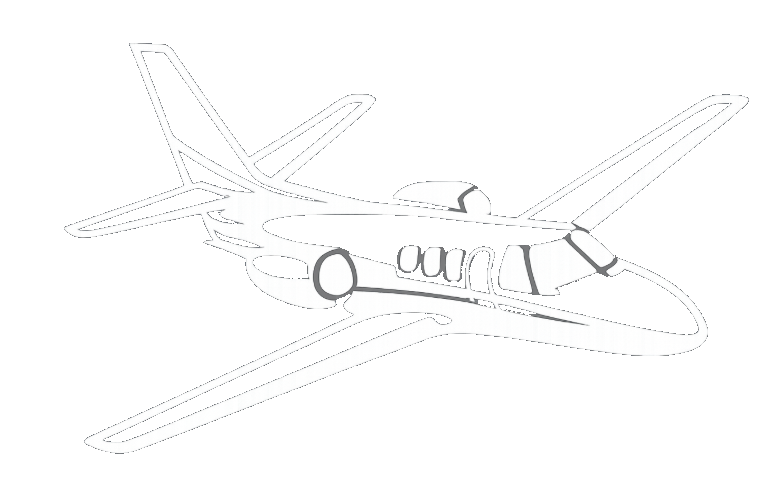
On Sunday, November 1, 2026, a Learjet 60 crashed in Palm Beach County, Florida, and all nine people on board were killed. Our thoughts are with their families and with the residents affected on the ground. The cause has not been determined. This post separates what has been reported from what is not known, and describes the aircraft and its accident record using official sources.
What has been reported
- Aircraft: Learjet 60, registration N722BD, built in 2004 and registered to a Delaware company [1].
- Flight: Austin-Bergstrom International Airport, Texas, to North Eleuthera, Bahamas [1][2].
- Time and place: about 12:50 p.m. local time, near Military Trail in Palm Beach County. Officials have described the location as Greenacres, Cresthaven and Lake Worth Beach [2][3][4].
- People on board: nine, all killed, according to Transportation Secretary Sean Duffy [2].
- On the ground: no injuries had been reported, and about 600 residents of a nearby mobile home park were displaced [1][3].
The final minutes, as reported so far
Tracking data reported by AVweb shows the jet climbed to 41,000 feet, then descended to about 35,000 feet near Naples. The crew told Miami Center they had light clear ice that was manageable and moderate turbulence, then reported precipitation and requested a climb [1][2]. The jet entered a steep descending right turn, the crew declared an emergency and reported an overspeed condition, and the recorded descent rate exceeded 32,000 feet per minute before tracking was lost [1][2].
Thunderstorms were present across South Florida. A nearby weather observation about 15 minutes before the crash noted thunderstorms in the vicinity, and the jet appears to have passed through a stronger cell several minutes before the descent began [2]. These are early, unofficial reconstructions, and none of them establishes a cause.
The investigation
The NTSB is leading the investigation with FAA support, and it announced a media briefing in West Palm Beach for November 2 [2][4]. At the time of writing, we have not seen official confirmation of whether cockpit voice or flight data recorders were recovered. The NTSB says it generally tries to complete an investigation within 12 to 24 months, although the timing can vary [5]. Until then, any statement about the cause is speculation, and we will update this post only with official findings.
The Learjet 60
The Learjet Model 60 is a twin-engine business jet with aft-mounted turbofans, a low swept wing with winglets, and a T-tail. It was certified on January 15, 1993, under FAR Part 25, the transport category rules [6]. The later 60XR configuration, from serial number 60-319 on, has an updated avionics package and new interior floor plans [6].
| Learjet Model 60 | |
|---|---|
| Minimum crew | 2 pilots, for all flights |
| Maximum occupants | 10 (2 crew, 8 passengers) |
| Engines | 2 × Pratt & Whitney Canada PW305A, 4,600 lb takeoff thrust each |
| Maximum takeoff weight | 22,750 lb standard; optional 23,100 lb or 23,500 lb |
| Maximum landing weight | 19,500 lb |
| Maximum zero fuel weight | 16,500 lb |
| Usable fuel | 7,910 lb (2,898 lb in the wing tanks, 5,012 lb in the fuselage tank) |
| High-altitude certification | 51,000 ft special condition |
Figures from the type certificate data sheet [6]. The FAA type certificate number is A10CE. Limits vary by serial number and modification; the Airplane Flight Manual always takes precedence. Length, speed and range are omitted because published sources disagree.
The Learjet 60's accident record
We found no government agency that publishes an accident rate for a specific aircraft model, which would require flight hours by model. So we cannot give an official "accidents per 100,000 hours" figure for the Learjet 60, and any such number should be read with caution. What the NTSB does publish is the record of each event.
A search of the NTSB's CAROL database on November 2, 2026, shows 19 Learjet 60 events from 1992 to 2023: 15 accidents and 4 incidents [7]. This includes foreign events only when the NTSB was involved, so it is not a complete worldwide count, and the November 1 crash was not yet listed. Two of those accidents were fatal:
| Date | Location | Registration | Fatalities |
|---|---|---|---|
| September 19, 2008 | Columbia, South Carolina | N999LJ | 4 |
| May 5, 2013 | Valencia, Venezuela | N119FD | 2 |
With the November 1 crash, that makes three fatal accidents and 15 deaths in this record.
The Columbia accident is the best documented. The NTSB found the probable cause was the operator's inadequate maintenance of the tires, which led to multiple tire failures during the takeoff roll due to severe underinflation, and the captain's rejected takeoff after V1. It also cited deficiencies in the design and certification of the Learjet 60's thrust reverser system as contributing to the severity of the accident [8].
General aviation safety in context
The FAA tracks fatal accidents per 100,000 flight hours across general aviation. Its target was below 0.92 for fiscal year 2025, 0.91 or below for fiscal year 2026, and its long-term goal is no more than 0.89 by fiscal year 2028 [9]. Separately, the AOPA Air Safety Institute, an industry organization, reported 3.86 accidents and 0.65 fatal accidents per 100,000 flight hours for 2023, the latest year with complete data in its analysis [10]. These figures cover all of general aviation, from light piston airplanes to business jets, and they use different scopes, so they should not be compared directly with each other or applied to one aircraft type.
References
- Aviation International News, "Florida Learjet Crash Claims Nine," November 2026
- AVweb, "Nine Killed in Florida Learjet Accident," November 2026
- NBC News, "'Cataclysmic' jet crash onto Florida roadway kills all 9 on board," November 2026
- NTSB Newsroom on X, go-team announcement, November 2026
- NTSB, "The Investigative Process"
- EASA, Type Certificate Data Sheet IM.A.212, Learjet Model 60, Issue 04, November 12, 2024
- NTSB, CAROL aviation investigation search
- NTSB, Aircraft Accident Report AAR-10/02, "Runway Overrun During Rejected Takeoff"
- U.S. DOT, FY 2026 Annual Performance Plan
- AVweb, "Report: GA Accident Rates Fall," on the AOPA Air Safety Institute report, November 2025
This post is based on early public information and may change as the investigation proceeds. It is not an official finding.